

Buying a property is one of the biggest financial decisions you may make. During the property-buying process, two important legal documents you will commonly come across are the Agreement to Sale and the Sale Deed.
Although both documents are related to a property transaction, they serve different purposes. Understanding the difference between a Sale Deed and Agreement to Sale can help buyers avoid legal complications and make informed decisions.
In this guide, Nine One Realty explains the key differences between an Agreement to Sale and a Sale Deed, their importance, and when each document is used.
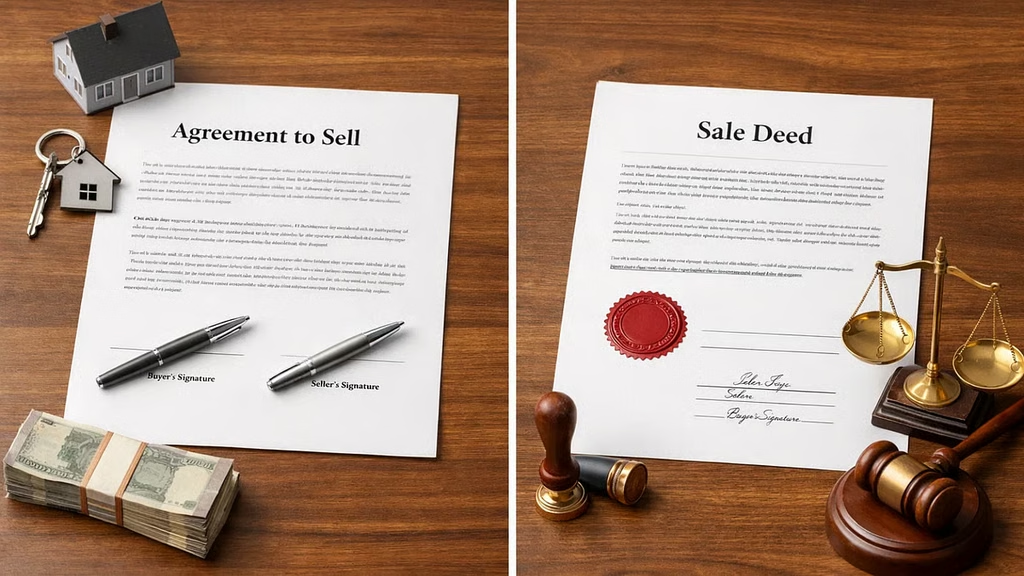
What is an Agreement to Sale?
An Agreement to Sale is a contract between the buyer and seller stating the terms and conditions under which the property will be sold in the future.
It generally contains details such as:
- Property description and address
- Agreed sale price
- Payment schedule
- Advance or booking amount
- Date or timeline for execution of the Sale Deed
- Responsibilities of the buyer and seller
- Conditions related to possession
- Consequences of default or cancellation
An Agreement to Sale essentially records the intention and agreed terms of the parties to complete the property transaction.
However, an Agreement to Sale by itself generally does not transfer ownership of the property to the buyer.
What is a Sale Deed?
A Sale Deed is the principal legal document through which ownership of a property is transferred from the seller to the buyer, subject to applicable law and completion of the required formalities.
It is normally executed after the agreed terms and payment conditions have been fulfilled.
A Sale Deed generally includes:
- Details of the buyer and seller
- Complete property description
- Sale consideration
- Payment details
- Transfer of rights and title
- Possession details
- Representations and warranties
- Other legally relevant terms
The Sale Deed is generally registered with the appropriate Sub-Registrar office, with applicable stamp duty and registration charges paid.
Sale Deed vs Agreement to Sale: Key Differences
| Particular | Agreement to Sale | Sale Deed |
|---|---|---|
| Main purpose | Sets out the terms for a future sale | Records the completed sale and transfer |
| Ownership | Generally does not transfer ownership by itself | Transfers ownership subject to legal requirements |
| Timing | Usually executed before the final sale | Usually executed at the time of completion |
| Payment | May specify advance and future payments | Usually records agreed consideration and payment |
| Registration | Registration requirements depend on the transaction and applicable law | Generally registered for transfer of immovable property |
| Legal significance | Creates contractual obligations | Documents the conveyance/transfer of title |
| Possession | May specify future possession | Can record delivery of possession |
Is an Agreement to Sale the Same as a Sale Deed?
No.
An Agreement to Sale and a Sale Deed are not the same document.
An Agreement to Sale primarily establishes the terms and obligations for completing the proposed transaction, whereas the Sale Deed is the document through which the sale/conveyance is completed and ownership is transferred, subject to applicable law.
Therefore, property buyers should not assume that signing an Agreement to Sale alone makes them the legal owner of the property.
Why is the Sale Deed Important for Property Buyers?
A properly executed and registered Sale Deed provides important documentary evidence of the transfer of property rights.
Before purchasing a property, buyers should also undertake appropriate title and legal due diligence. Depending on the property, this may include checking previous title documents, encumbrances, approvals, property records, RERA details where applicable, and other relevant documents.
A professional property consultant and qualified legal professional can help buyers understand the transaction and identify documents that need verification.
What Should You Check Before Signing an Agreement to Sale?
Before signing an Agreement to Sale, buyers should carefully review:
- Ownership and title documents
- Property description and area
- Total purchase price
- Payment schedule
- Possession date
- Outstanding dues or liabilities
- Encumbrances or existing loans
- Cancellation and refund clauses
- Default and penalty provisions
- Registration and stamp duty obligations
- Approvals and permissions applicable to the property
- RERA registration and project details, where applicable
Never rely only on verbal commitments. Important promises and commercial terms should be properly documented.
Sale Deed Registration in Gujarat
For property transactions in Ahmedabad and across Gujarat, buyers should ensure that the applicable stamp duty, registration charges and other government requirements are properly complied with.
The exact requirements can vary depending on the nature of the transaction and property. Buyers should verify the latest applicable rules with the relevant government authority or take professional legal advice before execution.
Agreement to Sale or Sale Deed: Which One Comes First?
In a typical property transaction, the Agreement to Sale comes before the Sale Deed.
The process may broadly look like:
Property Selection → Due Diligence → Agreement to Sale → Payment as Agreed → Sale Deed → Registration → Possession
However, the exact process can vary depending on whether the property is a resale property, new development, plotted development, commercial property, or another type of transaction.
Common Mistakes Property Buyers Should Avoid
Some common mistakes include:
- Signing documents without understanding the terms
- Paying a large amount without proper documentation
- Not verifying ownership/title
- Ignoring existing mortgages or encumbrances
- Not checking property approvals
- Assuming an Agreement to Sale proves ownership
- Failing to verify the Sale Deed before registration
- Not keeping copies of all transaction documents
- Relying solely on a broker’s or seller’s verbal assurances
For high-value property transactions, independent legal verification is strongly recommended.
Buying Property in Ahmedabad? Get Professional Guidance
Whether you are purchasing a villa, bungalow, apartment, commercial property, plot or investment property in Ahmedabad, understanding the documentation is an important part of the buying process.
Nine One Realty helps property buyers explore residential and commercial properties across Ahmedabad and the Ahmedabad–Gandhinagar growth corridor.
From property discovery to transaction coordination, our team can help you make a more informed property decision.
Final Takeaway
The key difference between an Agreement to Sale and Sale Deed is their purpose.
An Agreement to Sale generally sets out the terms and obligations for a future property sale, while a Sale Deed is the document used to complete the sale/conveyance and transfer ownership, subject to applicable legal requirements.
Before signing either document, buyers should carefully verify the property’s title, documents, approvals, financial obligations and applicable registration requirements.
Looking for verified residential or commercial properties in Ahmedabad?
Nine One Realty
Ahmedabad Real Estate Consultancy
Website: www.nineonerealty.com
Phone: +91 99740 00200