

Buying a property is one of the biggest financial decisions you can make. Before purchasing a house, apartment, villa, bungalow, plot, or commercial property, it is important to verify that the property has a clear legal title and is free from undisclosed financial or legal liabilities.
One important document used during property verification is the Encumbrance Certificate (EC).
But what exactly is an Encumbrance Certificate, why is it important, and how can property buyers in Ahmedabad obtain and verify it?
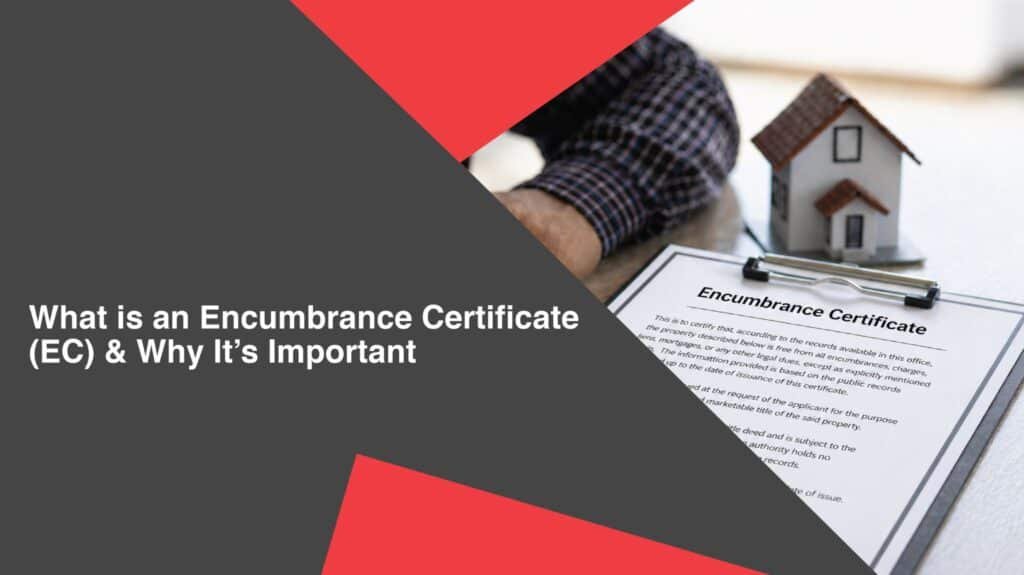
What Is an Encumbrance Certificate?
An Encumbrance Certificate (EC) is an official document that provides information about registered transactions and certain encumbrances affecting a property for a specified period.
It is primarily used to determine whether the property has registered liabilities such as a mortgage, charge, sale, or other registered transaction recorded with the relevant registration authority.
In simple terms, an EC helps a buyer understand the registered transaction history of a property and whether any registered encumbrance appears against it during the period searched.
Why Is an Encumbrance Certificate Important?
Before purchasing property, buyers should conduct proper legal and document verification. An EC is one of the documents that can help with this process.
1. Helps Check Registered Liabilities
An EC can indicate whether registered transactions or charges have been recorded against the property during the relevant period.
2. Supports Property Due Diligence
Property buyers can use the EC as part of their broader title and legal verification process.
3. Helps During Home Loan Processing
Banks and financial institutions may require property-related documents, including title and registration records, as part of their loan due diligence.
4. Helps Verify Transaction History
An EC can provide useful information about registered transactions associated with the property for the period covered by the certificate.
5. Provides Greater Confidence to Buyers
Obtaining and reviewing property documents before making a purchase can reduce the risk of overlooking important legal or financial issues.
What Information Does an Encumbrance Certificate Contain?
Depending on the type of certificate and records available, an EC may contain details such as:
- Property identification details
- Period for which the search was conducted
- Registered transactions recorded during that period
- Details of registered sale or transfer transactions
- Details of registered mortgages or charges, where applicable
- Registration/document numbers and dates
- Names of parties involved in registered transactions
The exact information can vary depending on the applicable registration system and records maintained by the concerned authority.
What Is a Nil Encumbrance Certificate?
A Nil Encumbrance Certificate generally means that no registered encumbrance or transaction falling within the scope of the search has been found for the specified property and period.
However, buyers should understand that a Nil EC does not by itself guarantee that the property has absolutely no legal issues.
There may be matters that do not appear in the particular registration records or fall outside the period and scope of the EC search.
Therefore, an EC should always be considered alongside other property documents and a proper legal title search.
Is an Encumbrance Certificate Enough to Verify a Property?
No.
An Encumbrance Certificate is an important property-verification document, but it should not be treated as the only document required before buying property.
A comprehensive property due-diligence process may include checking:
- Sale Deed and previous title documents
- Title chain
- Encumbrance Certificate
- Property card / relevant land records
- Mutation and revenue records, where applicable
- Approved building plans
- Development permissions
- RERA registration, where applicable
- Property tax records
- Possession-related documents
- Society or association documents, where applicable
- Bank NOC/release documents, if a mortgage existed
- Court/litigation searches where appropriate
A qualified property lawyer can help determine the documents and searches required for a particular property.
How Can You Obtain an Encumbrance Certificate in Gujarat?
In Gujarat, property registration and land-record-related services are handled through the relevant state government systems and registration authorities.
The process and documents required can vary depending on the property type, location and records involved.
Generally, the applicant needs relevant property identification details and the period for which the search/certificate is required.
For an actual property purchase, it is advisable to obtain the EC for an appropriate historical period and have the document reviewed as part of the complete title verification process.
Encumbrance Certificate vs Sale Deed
These two documents serve very different purposes.
| Encumbrance Certificate | Sale Deed |
|---|---|
| Provides information about registered transactions/encumbrances for a specified period | Records the transfer of ownership between seller and buyer |
| Used as part of property due diligence | One of the principal documents evidencing a sale transaction |
| Covers a specified search period | Relates to a particular transaction |
| Does not by itself establish complete title | Forms an important part of the title chain |
Both documents can be important when verifying a property.
When Should You Ask for an EC?
You should consider obtaining and reviewing an EC before paying a substantial advance or finalising a property purchase.
For resale properties, plots, villas, bungalows and commercial properties, checking the registered transaction history can be particularly useful as part of the overall due-diligence process.
For under-construction projects, buyers should also verify project-level approvals, RERA information and other relevant documents.
Key Takeaway for Property Buyers
An Encumbrance Certificate is an important part of property due diligence, but it should never be considered a standalone guarantee of clear title.
Before purchasing a property in Ahmedabad or the Ahmedabad-Gandhinagar growth corridor, buyers should conduct a comprehensive verification of the property’s title, approvals, registration records and other relevant documents.
Looking for a Verified Property in Ahmedabad?
Nine One Realty helps buyers explore residential, luxury villas, bungalows and commercial properties across Ahmedabad and the Ahmedabad-Gandhinagar growth corridor.
Whether you are looking for a property in Vaishnodevi, Gota, Jagatpur, Zundal, Tragad, Adalaj, Gandhinagar or nearby growth corridors, proper property due diligence should be an important part of your buying decision.
Nine One Realty
🌐 www.nineonerealty.com
📞 +91 99740 00200